Smaller Landed Homes Gain Ground as Supply Stays Tight
-
Smaller newly built landed homes in Singapore are seeing stronger demand from HDB and condominium upgraders.
-
Over the past 25 years, landed housing supply grew by only 12%, from 67,229 units in 2000 to 75,338 units in 2025.
-
In contrast, the supply of private flats and condominiums increased by 228%, rising from 114,532 units to 375,612 units.
-
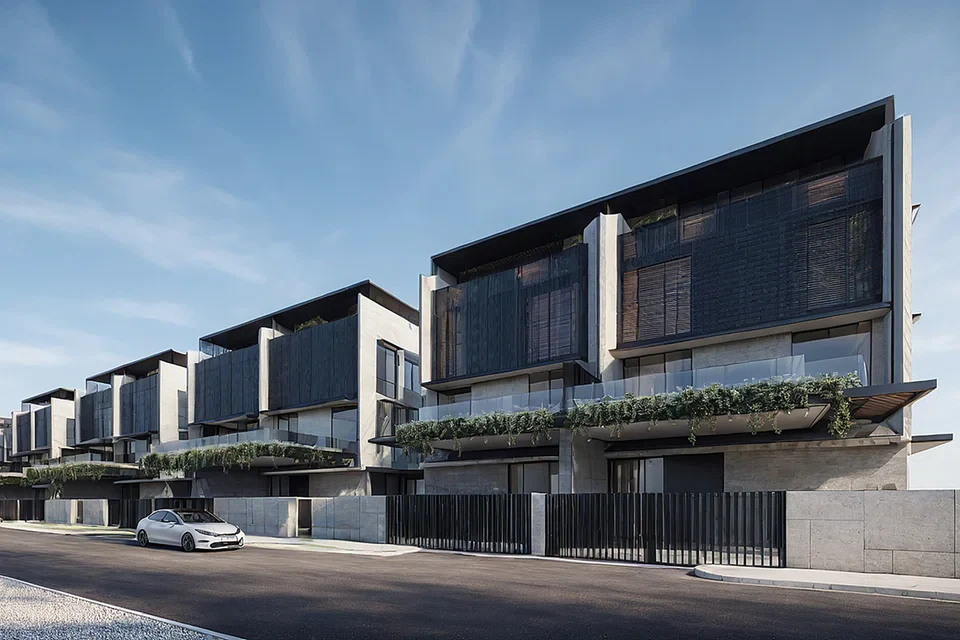
New compact landed homes typically sit on land sizes between 1,600 and 3,000 sq ft, making them more attainable for upgraders.
-
These homes appeal to younger families due to lower overall pricing and more manageable layouts.
-
Strict URA zoning rules and minimum plot size controls continue to limit new landed housing supply.
-
As a result, buyers are prioritising well-designed smaller landed homes when upgrading.
Smaller newly built landed homes are drawing strong interest from HDB and condominium upgraders, even as Singapore’s overall landed housing supply has remained broadly flat for 25 years.
According to figures from the Singapore Department of Statistics, the total supply of landed homes increased by just 12 percent, rising from 67,229 units in 2000 to 75,338 units in 2025. Over the same period, the number of private flats and condominiums surged by 228 percent, from 114,532 units to 375,612 units.
This imbalance has reshaped buyer behaviour. As condominium prices climbed steadily between 2020 and 2025, many owners found themselves asset-rich and ready to upgrade. However, traditional large landed homes have become increasingly out of reach due to higher land prices, construction costs, and tighter planning rules.
What Defines a Smaller-Lot Landed Home
In Singapore, smaller-lot landed homes are generally built close to the Urban Redevelopment Authority’s minimum plot sizes. These are approximately 1,615 sq ft for intermediate terrace houses and around 2,150 sq ft for semi-detached homes.
Most recent projects fall within the 1,600 to 3,000 sq ft land size range. Property agents often describe these as compact landed homes. While smaller in land area, they are designed with efficient layouts that suit modern family needs.
| Housing Type | Units in 2000 | Units in 2025 | Growth |
|---|---|---|---|
| Landed Homes | 67,229 | 75,338 | +12% |
| Private Flats & Condos | 114,532 | 375,612 | +228% |
Recent launches of smaller landed homes have been well received by buyers, reinforcing the appeal of compact landed living. Springleaf Collection, a 999-year cluster landed development along Meng Suan Road comprising 10 five- and six-bedroom homes, was launched in August with prices starting from just over $5 million. According to ERA’s data, 80% of the units were sold within three months of launch. Other projects have seen similarly strong take-up. Parkwood Collection, a 99-year leasehold development launched in 2020 with 53 units, was fully sold, as was Belgravia Ace, a freehold strata landed project launched in 2022 with 107 units. Property analysts note that the strong sales performance of Springleaf Collection highlights sustained demand for compact landed homes. Looking ahead, private real estate equity firm Aurum Gravis is preparing to launch its Natura Collection in March 2026, adding to the limited pipeline of new landed housing.
Who Is Buying These Homes
Property agents identify three main buyer groups driving demand.
First are condominium owners who have benefited from strong price growth in recent years and are now cashing out to upgrade. Second are families who need more space, often with children entering school age. Third are aspirational buyers who have long wanted a landed home and are willing to accept a smaller land size to achieve that goal.
Sales data reflects this shift. New sales of landed homes on land parcels between 1,600 and 3,000 sq ft rose from 17 units in 2020 to 74 units in 2024. In the first 11 months of 2025 alone, 30 such units were sold.
Most buyers today are in their late 30s to early 40s, typically with one or two children. Many are upgrading from mature HDB estates or central condominium projects and are targeting landed homes priced around $6 million.
Why Supply Remains Limited
The limited supply of landed homes is not due to lack of demand, but structural planning controls.
URA zoning rules strictly regulate how landed areas can be redeveloped. Minimum lot sizes restrict subdivision, and some zones, such as bungalow areas, do not allow redevelopment into semi-detached or terrace homes. In addition, URA has not released new 99-year landed sites for some time.
As a result, even though developers are responding to buyer needs with smaller designs, the total number of new landed homes entering the market remains constrained. This scarcity has made recent launches particularly attractive, with strong take-up rates shortly after launch.
A Practical Alternative: Large-Format Freehold Condos
For buyers who like the idea of space but prefer a single-level layout, large-format condominiums are increasingly being considered as an alternative to compact landed homes.
One project that fits this profile is Terra Hill.
Located in the Rest of Central Region, Terra Hill is a freehold development just three minutes’ walk to Pasir Panjang MRT. Prices start from approximately $2,212 psf, positioning it competitively against both new compact landed homes and smaller luxury condos.
What stands out is the unit mix. Buyers can consider large single-level residences ranging from 2,120 sq ft to 3,035 sq ft. These homes offer the space many upgraders want, without the maintenance and staircases that come with landed housing.
For families weighing the jump from a condominium to landed property, Terra Hill provides a middle ground. It delivers generous internal space, freehold tenure, and strong connectivity, while keeping overall pricing more manageable than many landed options.
What This Means for Buyers
The rise of smaller landed homes highlights a clear shift in how Singapore buyers balance space, affordability, and long-term value. With landed supply constrained by planning rules, demand is likely to stay resilient, especially for well-located projects with practical layouts.
At the same time, buyers are becoming more open to alternatives. Large freehold condominiums like Terra Hill allow families to enjoy space comparable to landed homes, while staying within established central locations and benefiting from easier upkeep.
For upgraders deciding their next move, the key question is no longer landed versus condo. It is about finding the right balance between space, price, and lifestyle.